
I am 130k words into my fourth novel, The Magiq of Aenya, and should have a completed draft around August. But before then, I’ll be heading to my wife’s home country of Morocco, a real-world fantasy setting, to better realize the Arab-North African inspired City of Shemselinihar.
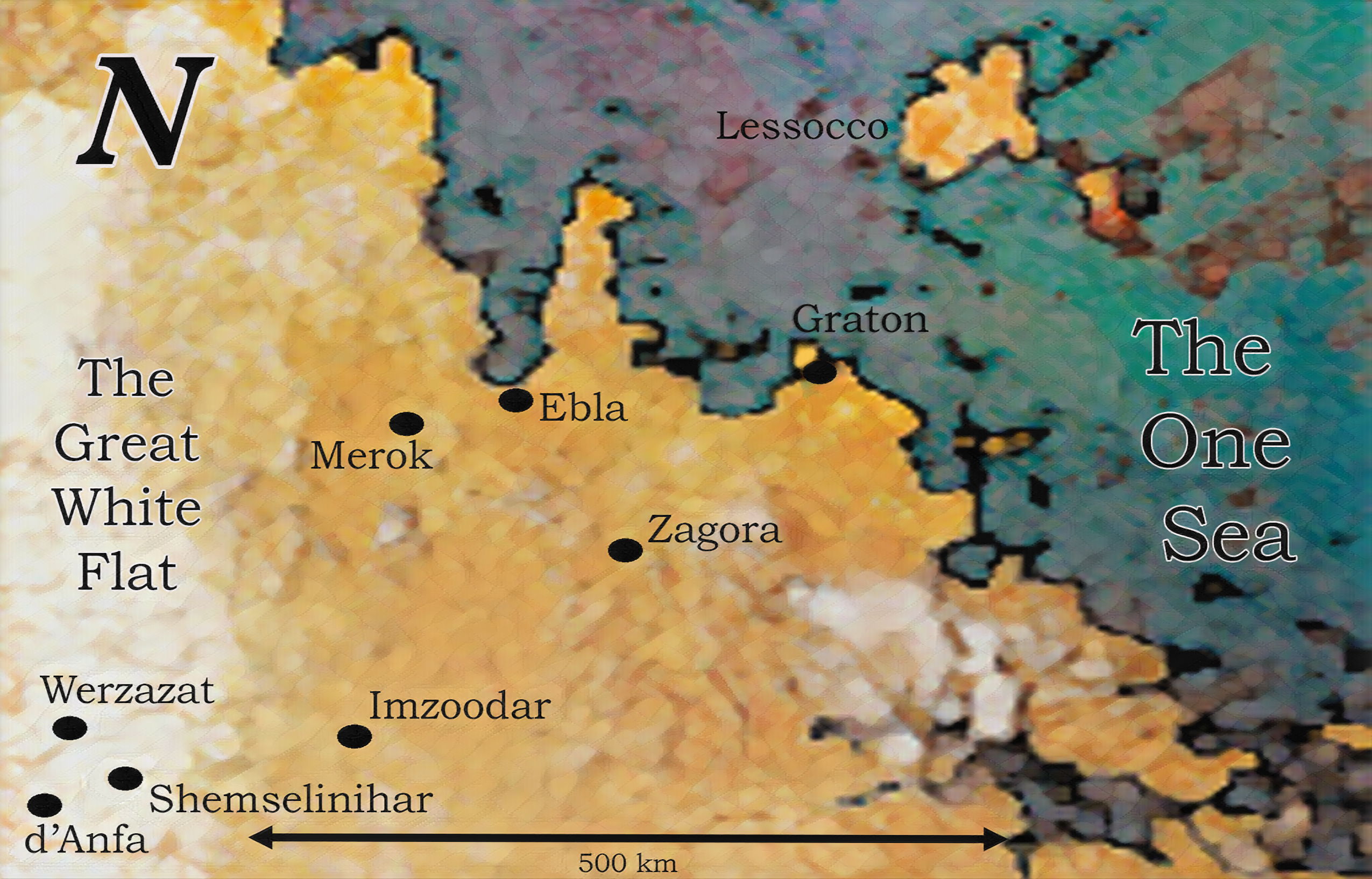
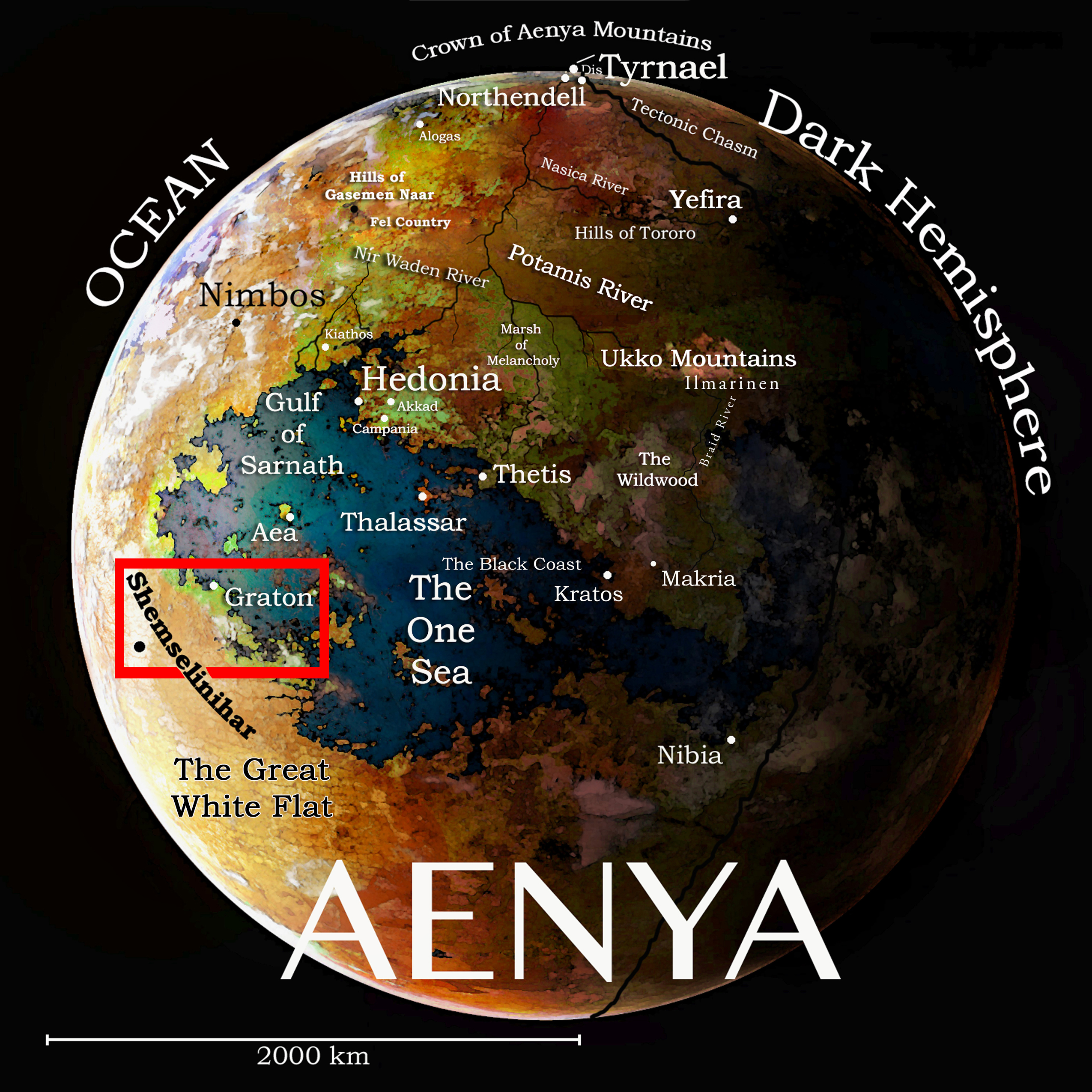
This is a rough map of the area featured in the story. The novel starts from the small port town of Graton and continues southwest through The Great White Flat, concluding in Shemselinihar, the Oasis City, the Blue City, City of Ten-Thousand Doors. I will be hiring someone to produce a more professional-looking map later on, but this is just to give you an idea of what is to come.
Fantasy often fails to capture our imaginations because the vast majority of it is cut and pasted from other books the author has read. They’re just copies of copies of copies. What is sorely missing is real-world experience, which creates a sense of sincerity that you just can’t fake. This is why Tolkien’s work continues to resonate with readers, despite its antiquated style, and why Miyazaki’s films have won the hearts of fans worldwide. These brilliant storytellers draw us into their worlds by writing about events they’ve lived through, events that mattered to them on a personal level, whether they happened in rural Japan or the trenches of the First World War.
My parents’ personal stories about growing up hungry and impoverished in 1940s Greece inspire much of my work. As a child, my father and his friends stole a batch of watermelons from a nearby field. Boys being boys, they made a sport of peeing on the rinds, and later had to eat the urine-stained remains after going hungry again. I inserted this absurd little anecdote into The Feral Girl, and it’s the kind of real-world detail no author is likely to dream up.
In a similar vein, Lilliea and Rose, the main characters from The Magiq of Aenya, are heavily based on my two daughters and my experiences raising them. The novel also borrows heavily from the trips we’ve taken to visit my wife’s family in Morocco. Shemselinihar is not meant to be any one place—it is neither Arabia nor Africa—but many of the sights, foods, and cultural practices of the Shemíran people have been adopted (with utmost respect) from these historical locations.
Fun fact: Shemselinihar was briefly mentioned in my first book, Ages of Aenya, which also has ties to Arab-speaking countries. The word ‘Batal,’ for instance, is Arabic for ‘fighter.’ Xandr and Thelana, when dressed, often wear Moroccan garb, ‘djellabas,’ to survive in the desert.
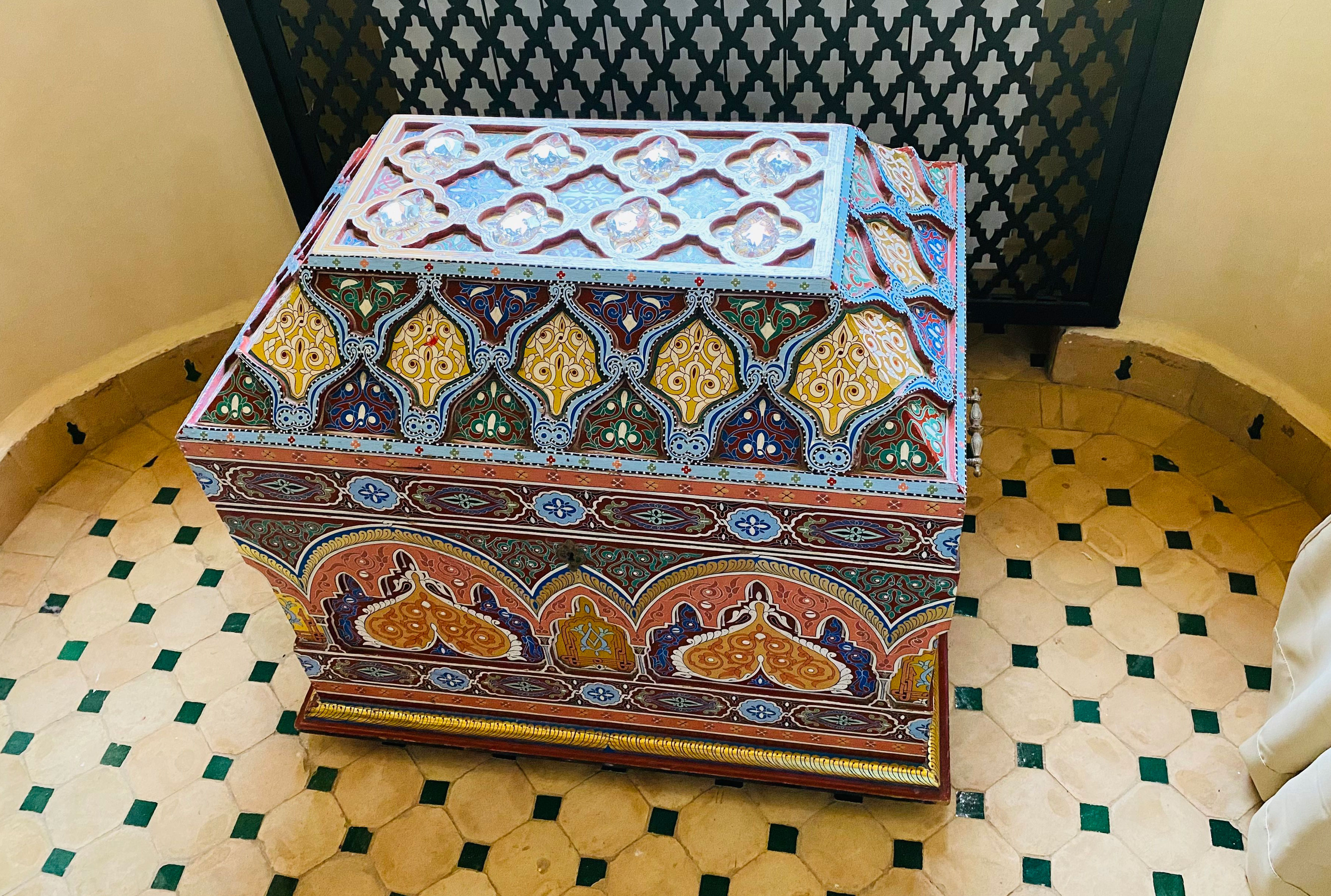
Morocco is a treasure trove for writers of the imagination, and Shemselinihar would not feel as authentic without my having spent so much of my time there. This ‘treasure’ chest (below) is a fine example of the kinds of wondrous items to be found in Marrakesh. It’s something Rose stumbles across after mysteriously waking in the guest bed of Sekhmet’s uncle, Hamza. Plot-wise, it’s a minor detail, but enough to give you a sense of the culture.
These hanging lanterns (below) permeate the Oasis City. They hang in different forms from the vaulted ceilings of wealthy nobles and the entryways of more modest homes.
Rose encounters this lantern in Hamza’s stateroom. Hamza is loosely based on a little-known character from The Arabian Nights, a wealthy noble who throws a large party for his friends night after night until his funds run dry, despite his wife’s repeated warnings that he will end up broke. I loved this tale from the time I read it as a teenager and knew I had to incorporate it into one of my books someday. It’s the kind of colorful detail that gives a fantastical setting a touch of real-world authenticity. Of course, Hamza’s story departs significantly from the original fable, and if you’re a long-time fan of Aenya, you’ll notice how it ties in nicely, albeit briefly, to the destruction of Hedonia in Ages of Aenya.

The little alcove (below) is a real place, I’ve been there, and it is truly magical. Everything is painted in the most vivid, otherworldly shade of blue imaginable. So naturally, I had to use it for a fight that takes place between Sekhmet, Rose, and a gang of thugs.

When Lilliea and Rose first arrive in the city of Shemselinihar, they are taken to the bazaar, where they are treated to a plethora of sights and sounds and smells — fruits and spices and all manner of flavorful oddities they’d never seen back home in Graton. It’s a great example of the “stranger in a strange land” motif.
One mystery remains, however – Lilliea cannot help but wonder where so much abundance originates, when the city is located amid a parched wasteland between the Great White Flat and the inhospitable Dead Zones to the south.
The Magiq of Aenya is my doorway into the world of traditional publishing. My dream is to see it, regardless of title, grace bookstore shelves alongside the likes of Sanderson and Martin. But playing the publishing game with the Big Boys can be an Olympian feat, so it might be a while before you can get your hands on this bad boy. In the meantime, you can enjoy the upcoming webtoon I am producing with my daughter (sneak peek below!).

Some people think frogs are cute. Others consider them gross. This scene from the second chapter encapsulates the difference in perspectives between Lilliea and her younger sister, Rose.
Ted (the frog) came about by happy accident. I hadn’t really planned on turning him into a full-blown character before Jasmine drew him, one day as a fluke, and the little guy stole our hearts.
 The Art of Storytelling
Leave a comment