
Me and my crazy ideas . . .
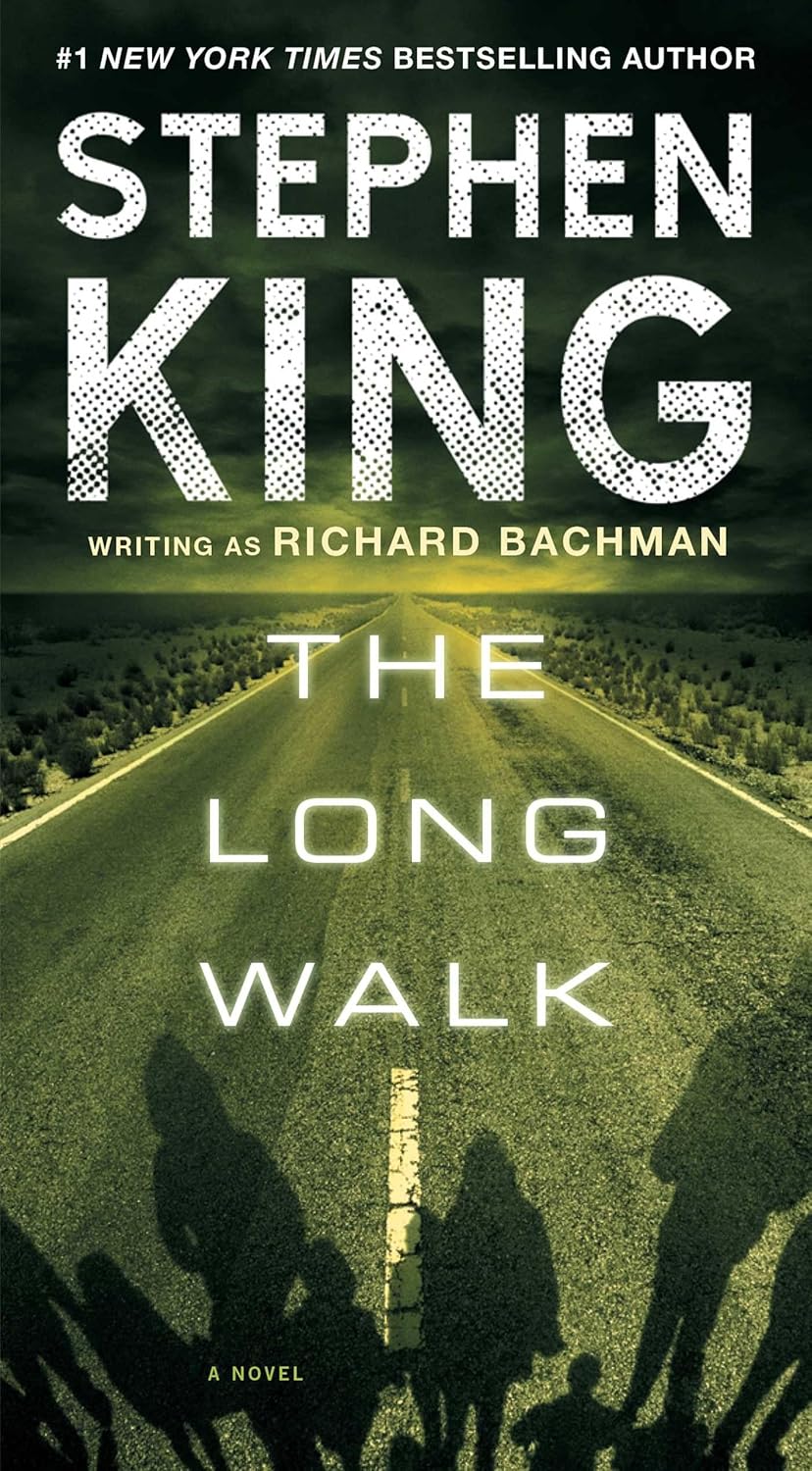
OK, so, after reading Stephen King’s The Long Walk, I thought it’d be a neat idea to recreate some of the story for my podcast by taking . . . a long walk. Now, to be fair, I didn’t have anyone following me around in a Jeep, ready to shoot me if I stopped, and my daughter and I (whom I bamboozled into joining me) set aside a specific destination for this little venture. For 8.8 miles, we walked without pause, from my house to Countryside Mall, after three hours and forty minutes! That might not sound impressive if you’re a professional hiker or athlete or something, but I’m just a nerdy, out-of-shape fifty-year-old writer. My fifteen-year-old kid, by contrast, a marching band pro, practically skipped the entire time.
Along the way, we were continually reminded of Stephen King’s other novels, but given how prolific the author is, this might have been inevitable. My daughter gathered photographic evidence of every creepy thing we found, but was hesitant to disturb the folks sitting in the broken-down jalopy straight out of Christine. We also passed by a house addressed 1922, but she argued, perhaps more wisely than I, that this was a likely coincidence.
When we finally reached the mall, my legs were on fire, and I was more than thrilled to sit my ass down at our local Cheesecake Factory. Gun to my head, could I have walked further? Probably. But five days? FIVE DAYS!?!?

Okay, if you’re not familiar with the book and are confused, The Long Walk is a quasi-dystopian novel written by Stephen King (under the pseudonym Richard Bachman) in 1979. And it is, to my mind, the most King novel to date. Somebody must have challenged him to write a three-hundred-page story about “nothing but walking,” and the bastard pulled it off with flying colors. No doubt, he could have taken an easier route — he could have given us flashbacks or cut to other characters not in the game, like all the newscasters covering the event, or government officials, like President Snow from The Hunger Games. But King knows the best way to keep his readers invested is to set them firmly in the minds and hearts (or in this case, shoes) of the characters, which is why his storytelling never fails to compel, and why I always roll my eyes when lesser writers serve up mustachio-twirling bad guys plotting evil schemes.

On its surface, The Long Walk is the story of a contest, where one hundred boys are forced to walk for as long as possible until only one of them remains. Like in Squid Games, the losers are shot dead the moment they give up, fall unconscious, or their legs get too cramped to continue. What makes it worse than other dystopian tournaments, like The Hunger Games, is that these kids volunteer for this! You spend much of the book wondering how or why anyone would accept such a challenge—it seems a bit implausible at first—until King delves into the power of peer pressure and social conditioning. Time and again, history has shown us what unimaginable things desperate people are prepared to do. Is it an allegory for war? Possibly. But King has never been big on allegory. Instead, he leaves us to draw our own conclusions. As a storyteller first and foremost, he explores the human condition, and deeper meanings flow naturally from his work.

In a sense, we are all taking a long walk. Some of us drop out earlier, others later, but as King so beautifully illustrates here, there is no destination to this walk we call life. We all end up in the same place. It’s the day-to-day moments that truly matter, and how we conduct ourselves along the way. Despite his twisted imagination, deep down King proves himself to be a softy, because the most beautiful part of The Long Walk, for me, is the way his chief protagonists, Garraty and McVries, develop an enduring emotional bond. Like soldiers on the battlefield, they find friendship, human connection, and the value of altruism through adversity.

Want more? Be sure to listen to all three hours and forty minutes of this very special edition of The Story Matters podcast!
 The Art of Storytelling
Leave a comment