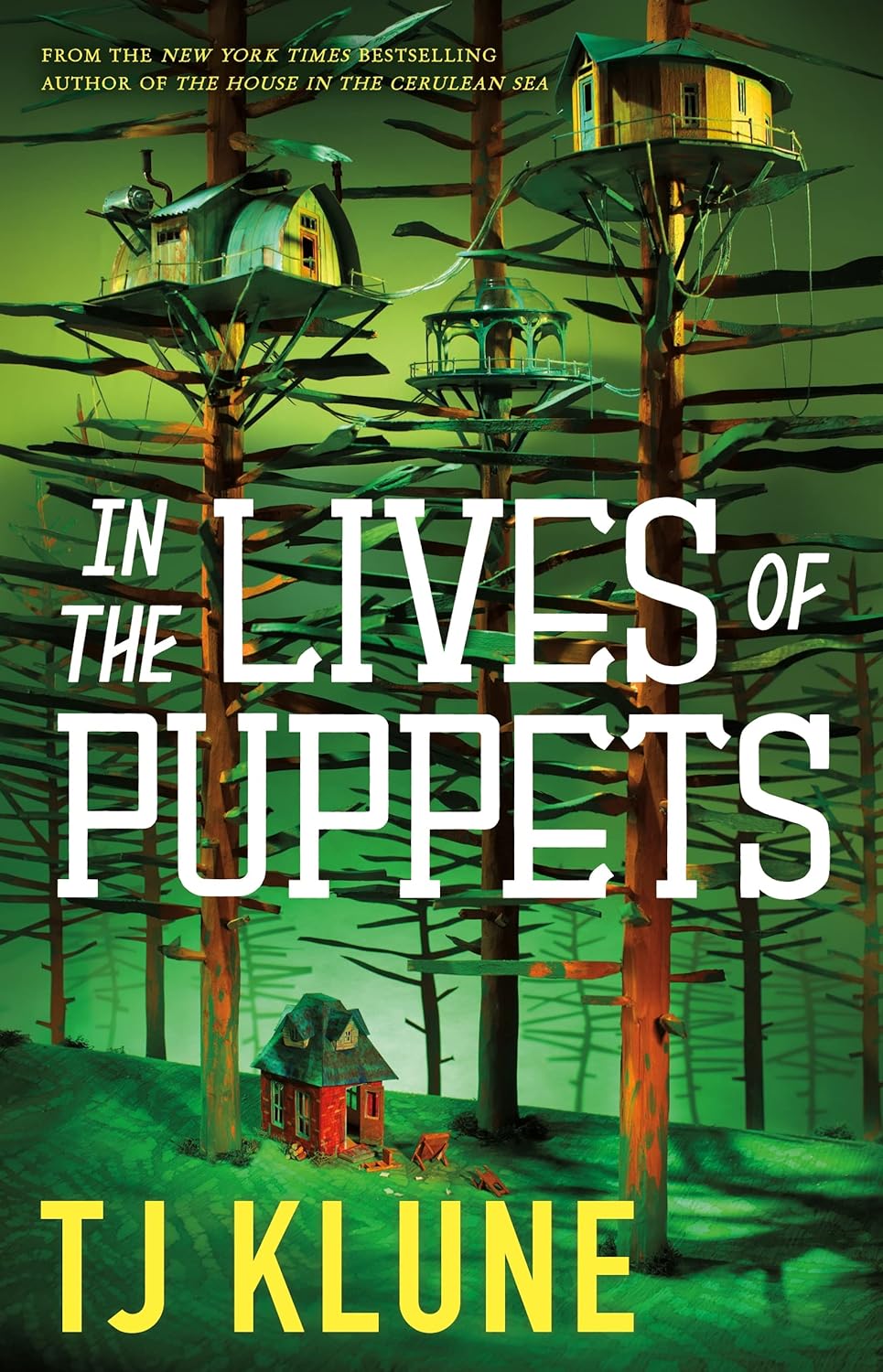
Parts Terminator, parts Spielberg’s A.I. (Philip K. Dick’s Supertoys Last All Summer Long), parts Pinocchio, T.J. Klune’s In The Lives of Puppets is a dystopian Sci-Fi adventure lacking in thrills and imagination. The plot revolves around Victor, the young protagonist and the last human child on Earth, built by a robot father. While this device might have made for some interesting drama, the story never quite resonated with me emotionally, despite the author’s repeated attempts at stirring the heartstrings. There’s also a romantic subplot involving a reprogrammed *Terminator,* named Hap, with whom the boy falls in love, yet the relationship often feels forced and awkward, and Klune doesn’t help matters by devoting so many passages to penis jokes and gross-out toilet humor. In a plot ripped straight from Futurama, these robots visit bordellos and deal with overcoming kink-shaming, which I can only assume was Klune’s way of making some pro-LGBQT+ commentary, but the messaging gets lost amid the implausibility of it all. And, unlike Futurama, a show based on absurdist humor, the sex scenes in the book just come off as cringe-inducing.
That’s not to say it’s all sex. The bulk of the story deals with the quest to rescue Victor’s robot dad from Las Vegas, redubbed The City of Electric Dreams. It’s basically Matrix headquarters, where every machine is hell-bent on destroying all humanity. Yet, there are very few surprises to keep the reader guessing. It’s all cliche and predictable, wherein the heroes accomplish their goals not through ingenuity or sacrifice but due to sheer dumb luck and a last-minute, deus-ex machina-style resolution.
The best and most creative aspects of the novel, and what I enjoyed the most, were the sidekick characters (a nervous, fidgety Roomba vacuum cleaner and a sociopathic nurse resembling a refrigerator). Roaming alongside their human companion, these cute, Star Wars-inspired droids brought much-needed humor to an otherwise dull reading experience. After the epilogue, a thirty-page short story attached to the end of the book proves Klune possesses the writing chops to make the reader care, but it’s too little too late, and I only wish we could have enjoyed this level of pathos in the main storyline.
 The Art of Storytelling
“deus-ex machina-style”
….I see what you did there. HEEEE
LikeLiked by 1 person
You’re giving me too much credit, Mars. That was an accidental bit of cleverness on my part!
LikeLike