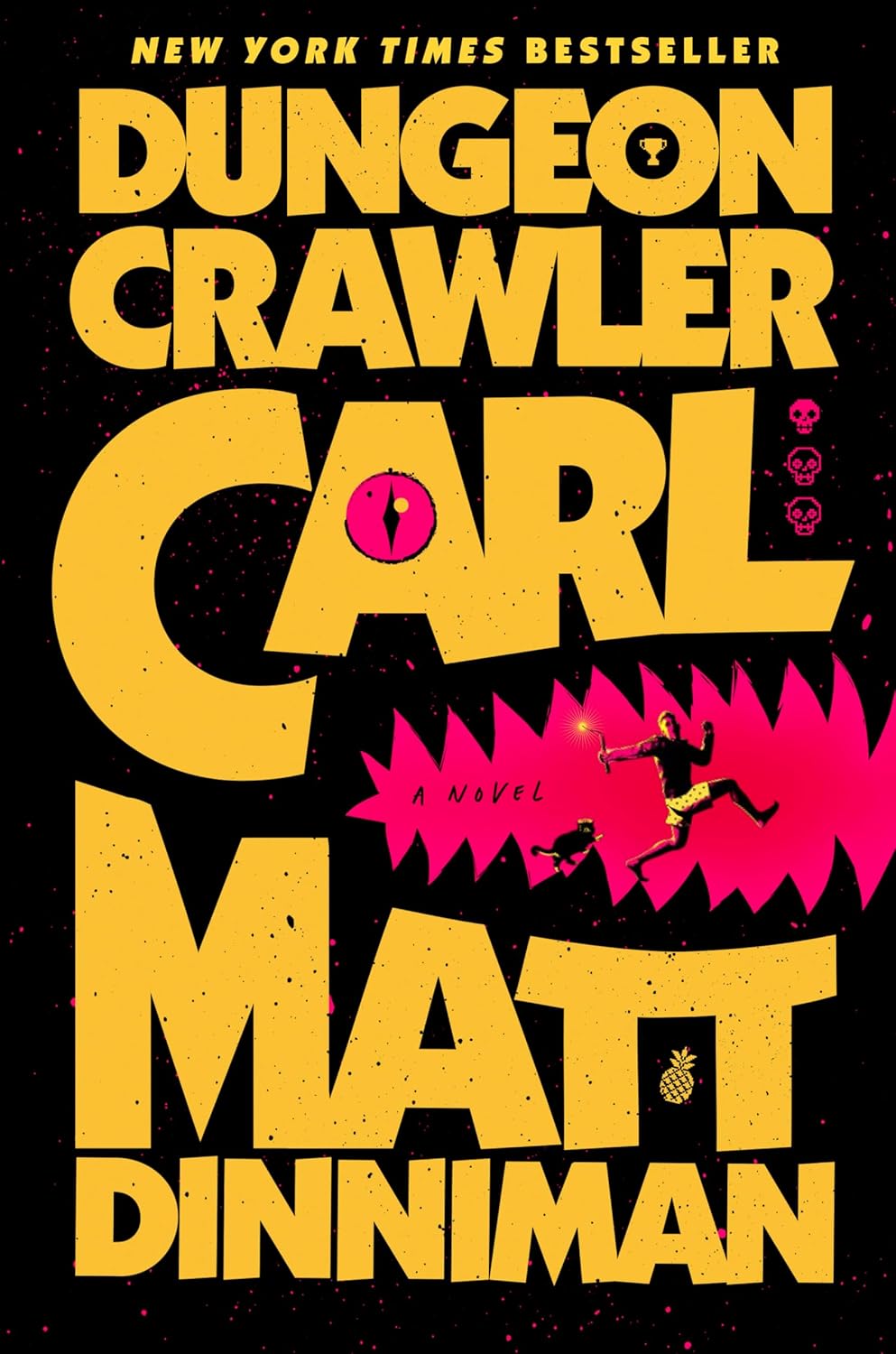
I can’t believe how stupid this book is! I wouldn’t have wanted to write this even if it had made me as successful as Dinniman. I mourn for all the trees wasted printing this book.
These were my initial, honest-to-goodness thoughts upon reading Dungeon Crawler Carl. Now, I only picked this up because I was looking for comp titles to compare to my WIP, because publishers insist you copy what’s trending, and because Carl is more famous than Jesus. Even the saleswoman at the counter enthusiastically said to me, “We love the Carl series!” And, since I love RPGs, I figured I am the target audience for this kind of storytelling.
Nope.
Turns out, storytelling means a lot more to me than most. Either that, or modern readers have forgotten how to read (more on that later). Here’s a clue: a great novel isn’t just a collection of trending tropes and topics. I am not going to enjoy a Big Mac just because I love hamburgers. What matters in writing, or should matter, anyway, is the crafting of the thing: how plot threads interweave and develop, how characters grow and change, and how well the author conveys these ideas with regard to pacing, style, and, if we’re lucky, substance. Unfortunately, Carl fails all of these metrics. You can call it a “story” only by the very loosest definition.
I admit, I wrote this same book in middle school, back when I considered mindless action scenes good writing. But I am too ashamed to show it to anyone, or any of the other story-filled ring binders I keep in my desk drawer, not wanting my fans to lose respect for me. I explained to my wife that my high school novel, The Nomad, can‘t ever be published because “it’s just a lot of fighting and non-stop action.” Now, after reading Dinniman, I may have to rethink that. But I can honestly say I spent the past thirty years learning how not to write Dungeon Crawler Carl, yet here we are.
Look, I am not here to shame your guilty pleasure. There’s nothing wrong with dumb fun. Heck, Marvel/DC beat-em-ups line my bookshelves, and even my more recent releases feature plenty of stabbing, punching, and things going BOOM! On its surface, The Feral Girl is the story of a young naked girl running around the jungle fighting dinosaurs. But whatever is happening on the page, you need emotional investment to give those action scenes weight. We care about Thelana because we can relate to her: she struggles with loneliness, hunger, doubt, and fear. But if she were nothing but a list of ability scores, devoid of personality, devoid of relatable human qualities, the reader won’t care if she survives or gets eaten by the T-Rex. At least, this was my assumption going into it, before the world turned into Idiocracy.
Dinniman takes the most uninteresting and tedious parts of playing video games and makes them the focus of his novel. This is literally why I prefer pen-and-paper games like Dungeons & Dragons. But even when I’m running a D&D game, I try to invest my players with storytelling, with a reason for “being there” other than, “Oops, aliens blew up the world and here’s a dungeon!” In other words, I try to rise above grinding for experience points. Unfortunately, Carl isn’t Baldur’s Gate; it’s Diablo.
When the titular hero isn’t murder-spreeing his way through yet another parade of goblins, he’s sorting through lists of magic items and opening loot boxes. I call these events “random encounters”—stuff that in no way impacts the story, stuff you can take out that the reader won’t even notice is missing. Why anyone with access to a PlayStation would waste their time reading this instead of playing it is beyond me. If the book contained anything worth caring about other than “will Carl survive this time?” I might have given it a pass—but no, it’s just one fight after another for two hundred pages straight. Who knows, maybe an actual plot (or a second character other than his cat) makes an appearance around page 201, but halfway into the book, I can’t bring myself to care. Even the writing gets a C+ when it comes to Basic English 101. Here’s a taste:
“Do you have any sort of slashing skill?” I asked. “You know, something with your claws?” “Of course I do,” Donut said. “My Slice Attack is at level four, and my Back Claw is also level four.” “Okay, good,” I said. “You can help if we get into trouble. Your strength is way higher than mine. You should get in there once your magic runs out.”
Shakespeare, this is not. Hell, it’s not even Robert Howard, who should be rolling in his grave about now. (Have you read The Frost Giant’s Daughter?!?)
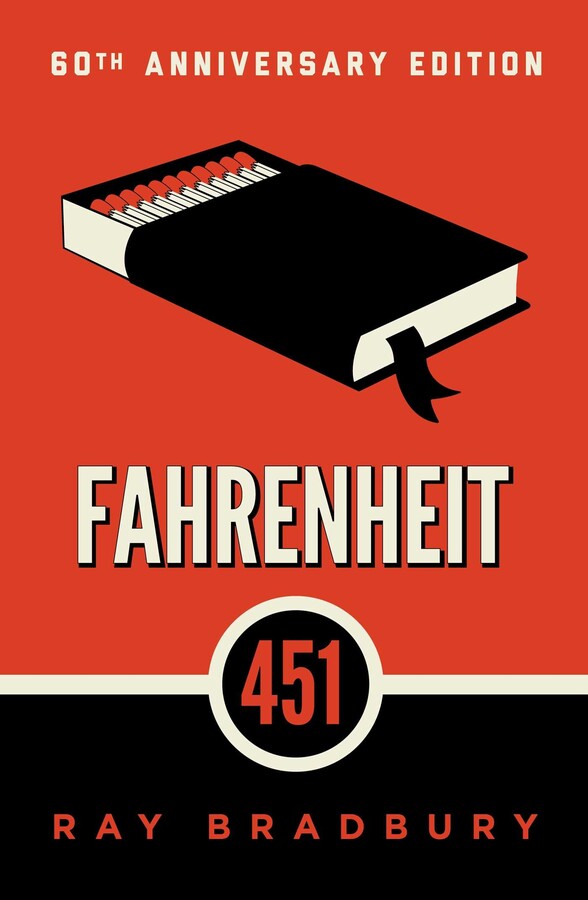
This is what—I fear—Ray Bradbury warned us about. Yes, that’s right. By some odd coincidence, I happened to be reading Dinniman and Bradbury at the same time. And while these two authors couldn’t be further apart in terms of, well, everything, I couldn’t help but draw parallels between the anti-intellectual dystopia Bradbury describes in Fahrenheit 451 and what passes for literature today.
As much as I hated reading Carl, I was that much impressed by Fahrenheit 451. It may be the greatest dystopian novel I’ve ever read. The prose is so rich with meaning, so beautifully layered, I had to pick through every line, like a scientist peering into a microscope. A masterpiece of this caliber is lost on high schoolers who haven’t yet learned to appreciate language and storytelling. It’s like learning calculus before arithmetic.
What sets Fahrenheit apart from 1984, A Brave New World, and The Handmaid’s Tale is that it isn’t so much about the future; it’s about today. Unlike Orwell, Bradbury understood that censorship is unnecessary because people will choose comforting delusions over inconvenient truths any day.
“It didn’t come from the Government down. There was no dictum, no declaration, no censorship, to start with, no! Technology, mass exploitation, and minority pressure carried the trick, thank God. Today, thanks to them, you can stay happy all the time.”
Seventy years ago, Bradbury predicted the rise of TikTok and Reddit, describing how a constant barrage of information would keep us from thinking, making decisions, and knowing what’s going on in the world. Whirl man’s mind around about so fast under the pumping hands of publishers, exploiters, broadcasters that the centrifuge flings off all unnecessary, time-wasting thought! He understood the need to log off and “touch grass,” without which we are powerless to form our own opinions, becoming slaves to whatever YouTube tells us to believe. “The zipper displaces the button and a man lacks just that much time to think while dressing at dawn, a philosophical hour, and thus a melancholy hour.” He also foretold how social media would create a world of lonely, depressed people:
We have everything we need to be happy, but we aren’t happy. Something’s missing. I looked around. The only thing I positively knew was gone was the books I’d burned in ten or twelve years. So I thought books might help.
Fahrenheit 451 insists upon the necessity of art and literature, not just for the sake of profit, but for humanity’s sake, and how a true storyteller creates meaning through their work:
“It took some man a lifetime maybe to put some of his thoughts down, looking around at the world and life and then I come along in two minutes and boom! It’s all over.”
Books were only one type of receptacle where we stored a lot of things we were afraid we might forget. There is nothing magical in them, at all. The magic is only in what books say.
What Bradbury did not see coming, however, was Dungeon Crawler Carl. In the world of Fahrenheit 451, books are the antidote to ignorance, complacency, and a society that has sold its soul for profit. But he does briefly address the literary medium falling prey to market forces and late-stage capitalism:
The good writers touch life often. The mediocre ones run a quick hand over her. The bad ones rape her and leave her for the flies.
Make no mistake, the world of Fahrenheit 451 is the world we are living in today. Time and time again, we are told not to philosophize, not to moralize, not to preach. Publishers and agents make a point of this, claiming this is “bad writing” and that modern readers will reject it. And, of course, they’re right! When the only measure of success is book sales, we will never be challenged to think, or be made to feel uncomfortable when the ideas the author puts forward don’t already suit us. Don’t give them any slippery stuff like philosophy or sociology to tie things up with. That way lies melancholy. This isn’t just empty rhetoric. The Republican legislature in my home state of Florida recently voted to defund the study of sociology, because lawmakers couldn’t see the value in learning about human beings (since, ironically, they never studied sociology). For Bradbury, burning books served as a metaphor for the destruction of meaning. But in the real world, it’s a lot easier to get people to stop reading, or to get them to read books that have nothing to say.
“Everyone must leave something behind when he dies […] A child or a book or a painting […] Something your hand touched some way so your soul has somewhere to go when you die.”
Philosophy is the victim of modern-day capitalism, which is why authors like myself have to hide philosophy in mundane, mindless entertainment. That’s not to say there’s no fun to be had in books like Fahrenheit 451. Bradbury’s Montag is chased by a monster that could have been ripped straight from the pages of Dungeon Crawler Carl—a robotic hound with spider legs and a poison needle that juts from its muzzle—yet Montag’s encounter with this mechanical terror is anything but random, and the choice he makes to turn against it has profound consequences for the story and his character.
And he remembered thinking then that if she died, he was certain he wouldn’t cry. For it would be the dying of an unknown, a street face, a newspaper image, and it was suddenly so very wrong that he had begun to cry, not at death but at the thought of not crying at death.



Leave a Reply