
“The sun in the west was a drop of burning gold that slid nearer and nearer the sill of the world. All at once they were aware of the evening as the end of light and warmth.”
—William Golding, Lord of the Flies
Great works of literature transcend time and place. They not only speak to the people living in the time they are written, but to anyone of any age. Like Homer and Shakespeare, the storytelling greats tap into the deepest part of ourselves, transcending mere entertainment and the fads of their day. The best fiction points to the inherent truths that define who we are as a species, and in doing so, reflect our flaws and failings.
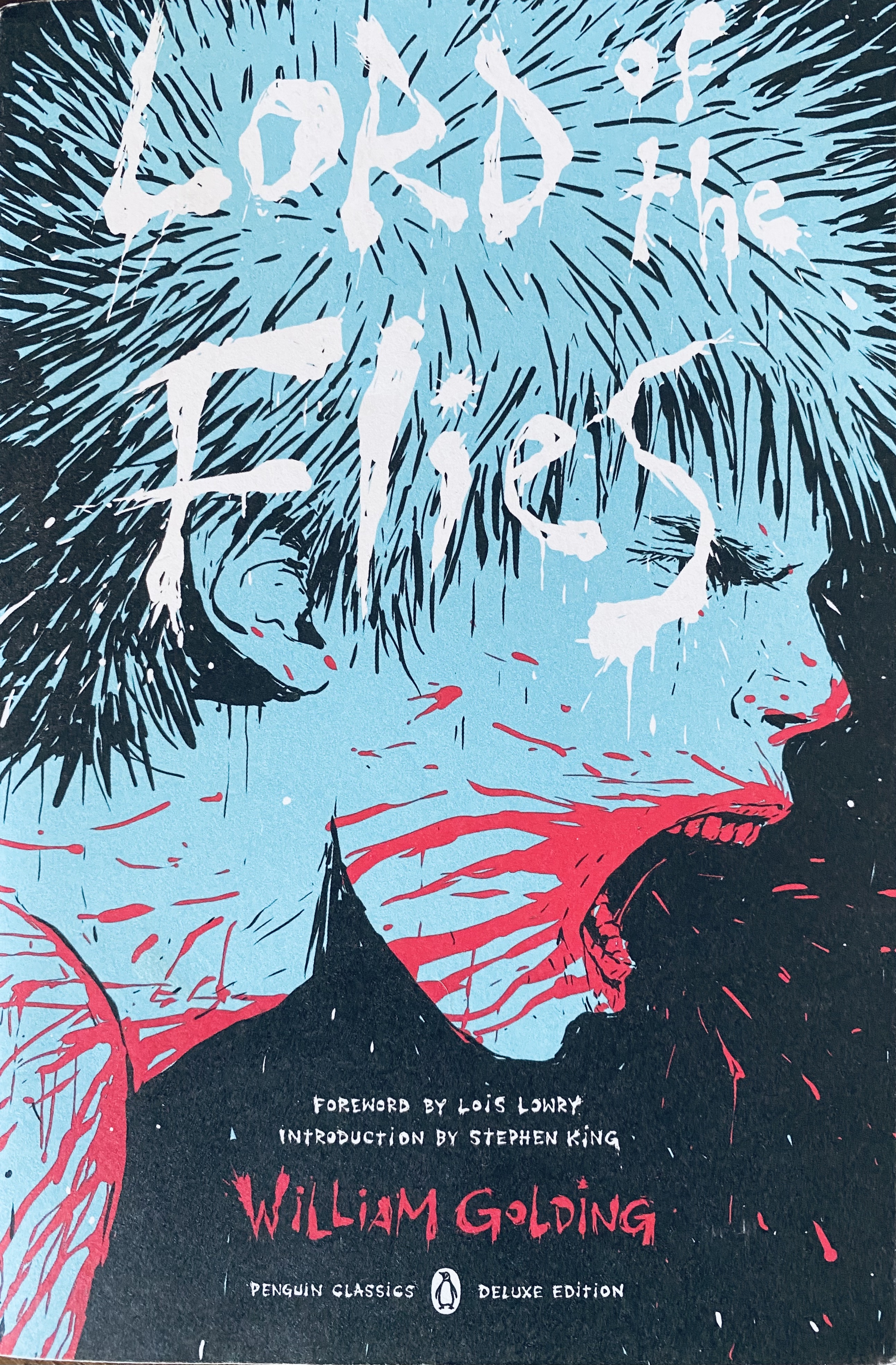
My apologies if all this sounds rather grandiose, but I am a romantic, after all, and I couldn’t help myself after finally reading William Golding’s Lord of the Flies. Even if you haven’t read it, you probably know the story about a group of boys stranded on an island who eventually turn into savages. It has been parodied on The Simpsons and South Park, and has become part of our cultural lexicon. “It’s Lord of the Flies over here!” Like Frankenstein, Tarzan, and 1984, Golding’s masterpiece lives on in our collective subconscious and continues to subtly influence our society today. It’s the type of book that reminds me why I read, write, and so passionately defend the idea that “story matters” in all of my podcasts.
“Here, struck down by the heat, the sow fell and the hunters hurled themselves at her. This dreadtul eruption from an unknown world made her frantic; she squealed and bucked and the air was full of sweat and noise and blood and terror.”
—William Golding, Lord of the Flies
Timeless novels like Lord of the Flies resonate differently with each generation. When the book was written in 1954, Americans on the eve of the Cold War were primarily concerned with nuclear proliferation and destruction. No doubt, readers at the time drew parallels between the world’s super-powers and the conflicting factions that develop on the island where the story takes place. Today, it is impossible to read the book without reflecting on our own divided nation, particularly when it comes to Trump and his cult of personality.
Lord of the Flies begins innocently enough, like an adventure and survival tale centered on a group of young boys, but it gradually devolves into a violent standoff between rival factions. Ralph is the sensible leader — possibly the oldest person on the island — whose primary concern is signaling a passing ship in the hopes of getting rescued, and tasks one group with maintaining a signal fire. But the boys become restless. They think keeping the fire is boring, preferring to hunt, make spears, and paint their faces like “Indians.” They want to have fun, consequences be damned. Jack is the charismatic leader who offers them what they crave, tapping into their adolescent fantasies. He manipulates their baser instincts, their fears, hatreds, and animalistic urges for violence. As the days wear on, Ralph’s reasoned arguments are dismissed as “weak,” and Jack seizes control. In a short time, a cult of personality arises around Jack, and the few who remain loyal to Ralph are threatened with violence. Ralph is not only removed from power but is also exiled from the tribe, forced to fend for himself alone. And yet Ralph’s banishment isn’t enough to satisfy Jack’s ego, because deep down, Jack knows Ralph is a better leader. And the only way to remedy this is to organize a hunt to murder his old political rival. Somehow, inexplicably, the boys go along with this plan. Keep in mind that these are just regular, everyday British kids, most of whom are not yet in high school. They are not evil. They set out with the best of intentions. But under Jack’s influence, they are transformed into a mindless gang of killers.
If this doesn’t remind you of someone, you probably wear a MAGA hat!
Like 1984, A Brave New World, and The Handmaid’s Tale, Lord of the Flies serves as a warning to future generations. Given our current political climate, you might be surprised by Golding’s knack for prophecy. But authors like Golding remind us of the ugly truths that have existed since humanity stood upright, aspects of ourselves we’d sooner forget — humanity’s capacity for greed, selfishness, egotism, tribalism, and violence.
Lord of the Flies is as timely today as it ever was, perhaps more so. In today’s divided world, it’s not just a worthy read, but a necessary one.

 The Art of Storytelling
Not sure if you heard of it but there was some real world case of this decades ago, some kids who got shipwrecked on an island. The kids basically just cooperated to survive for a year and looked out for each other. So interesting how different it played out from LotF. I think they were from Tonga in Polynesia.
LikeLiked by 1 person
Hey Peter, I don’t get many comments these days so I truly appreciate it.
I hadn’t heard about the real world incident but I’ll have to look it up. The joke people make is if it were a bunch of girls stranded on the island instead of boys, you’d have a utopia of cooperation and friendship.
When it comes to the book, the boys are fairly considerate and helpful at the onset, but Jack riles their passions and turns them into “savages” — something they are ashamed to realize the moment they are rescued. So perhaps the moral of the story is that good people can turn bad with the wrong influence. Who knows? Either way, LotF isn’t really about an island or survival, it’s a mirror Golding holds up to society. It could have taken place anywhere.
Thanks for stopping by!
LikeLiked by 1 person
Haha yeah makes sense, it’s been awhile since I’ve read it. That’s a good point about it being more of a societal metaphor. Yes getting blog views away from social media seems a little tough these days in general!
LikeLiked by 1 person