OK, Aenya fans, I have some great stuff for you today!
First and foremost, I have completed the final edit for the first book in The Magiq of Aenya series: The Stargazers’ Daughters. After painstakingly going through it for months, I managed to cut it down from 172k to 164,711 words. If you want to easily improve your writing, removing unneeded words is the best way to do it.
This still leaves me with a tome the size of Harry Potter and the Half-Blood Prince, and I worry publishers will reject it for this reason. But cutting The Stargazers’ Daughters any shorter, I feel, would only ruin the story. This is an adventure of epic proportions, and the reader needs time to familiarize themselves with the world and empathize with each of the five major characters. It may be possible to cut it in half, but the middle lacks a climactic punch and leaves too many issues unresolved. If a publisher insists on 120k or less, I may just go the selfie route, only this time, I will invest my life savings to promote it.
My beta readers are going through it once more, because reading it over the four and a half years it’s taken me to write it isn’t the same as finishing it in a week or two. It’s important to know how a book flows from one chapter to the next, how it’s paced, and how the tension builds over time. One mistake I made with The Princess of Aenya was to make every chapter an event. I wanted to give my fans something exciting to read after patiently waiting for the next installment, not realizing that a good story needs quiet, slice-of-life moments to make the dramatic moments more impactful. So far, my readers are telling me the book is compelling, the characters are endearing, and people are sure to love it.
In other news, I am overhauling my author site. AENYA.NET focuses heavily on world-building with an interactive map and pages of information delving into the history, species, and geography of Aenya. But the fourth book in the series is much more character-driven, and I wanted the site to convey that. The updated nickalimonos.com will be broken down by novel with a dedicated page for each. The Stargazers’ Daughters section will feature a free comic, The Fairy Trap, based on the upcoming webtoon, plus a gallery of new illustrations by my daughter, Jasmine.
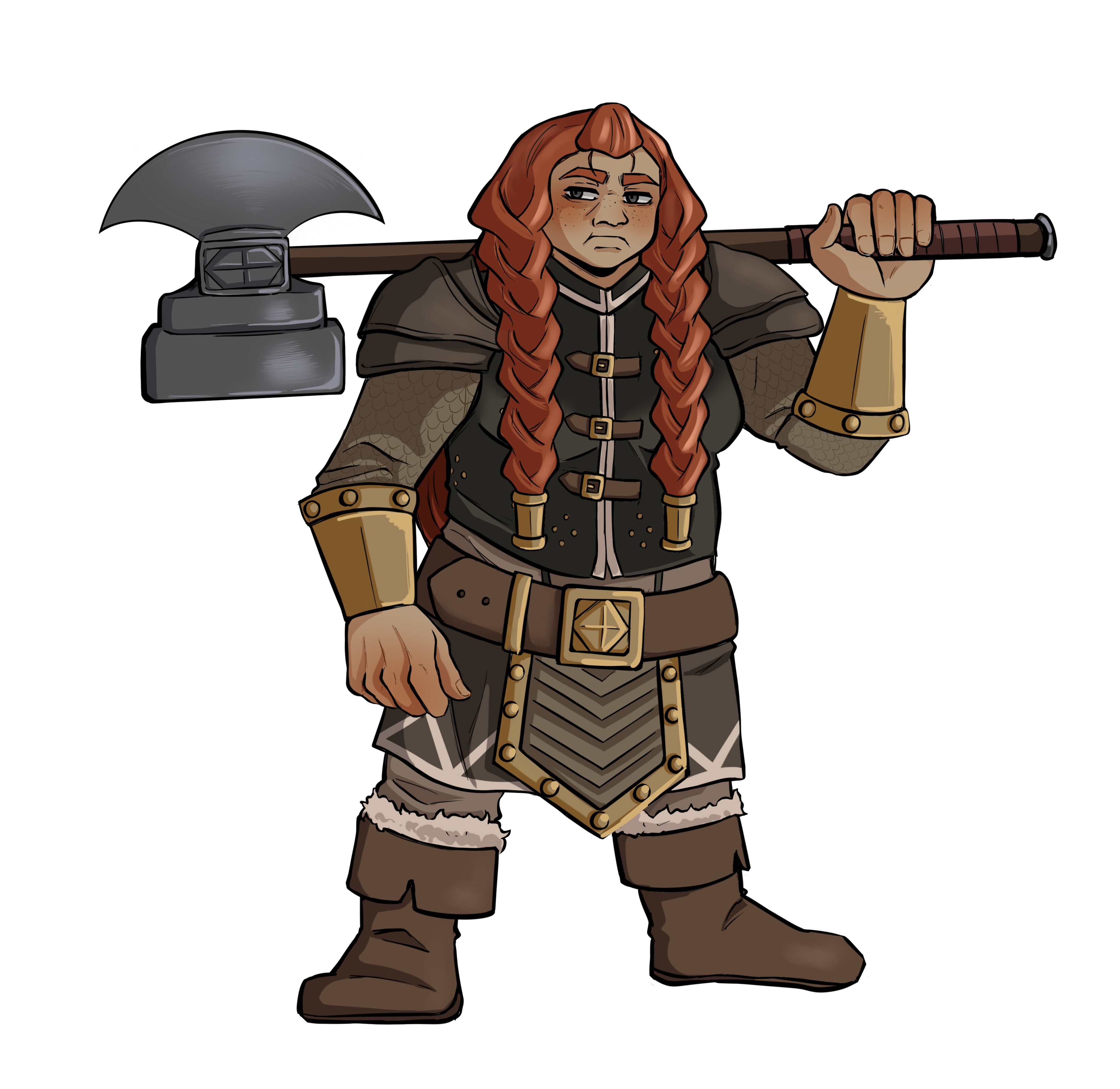
The Stargazers’ Daughters was born out of the 10-year D&D campaign I ran for my wife and daughters, and is inspired by Miyazaki films like My Neighbor Totoro and Howl’s Moving Castle. It’s exciting, romantic, and full of humor, and you can read it with your brain turned off, like Dungeon Crawler Carl. But there’s also a deeper, more philosophical layer to the story, wherein I explore science, magic, and the interplay between them. Thematically, the main character, Lilliea Graton, represents a rationalist view of the world. Her eight-year-old sister, Rose, by contrast, represents childhood and the imaginative faculties of youth. This is something I’ve been thinking about for decades, and something I’ve wanted to bring to the fore of the genre after reading modern popular fantasy, which tends to reduce magic to a set of rules, abandoning the sense of mystery and wonder that makes early fantasy feel magical.
The Stargazers’ Daughters explores the concept of the multiverse in a way we haven’t seen before. I have long been fascinated by the possibility that everything we imagine exists somewhere out there. Middle-earth, Hogwarts, your favorite show — it’s all REAL — given infinite space and time. I recognize how radical this idea may seem, and that I am making many assumptions. It may be that the multiverse is finite, or that the laws of nature simply do not allow for certain realities to manifest. Yet therein lies the beauty of fiction. As an author, I am not bound by the requirements of philosophy. My job is to move the reader emotionally and make them think.
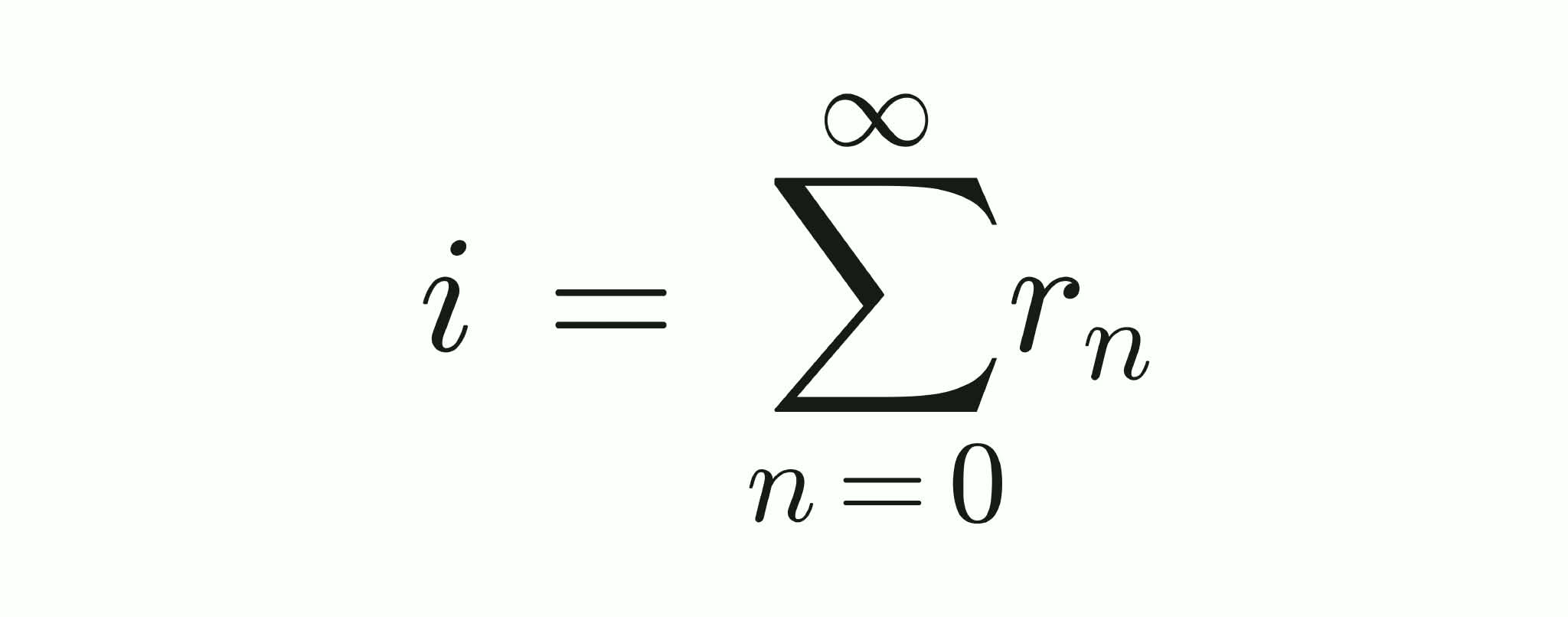
That being said, it’s important that writers do their homework. When it comes to matters of cosmology and really big numbers, I needed an understanding of science and mathematics. My shelves are stocked with the works of Sagan, Dawkins, Krauss, and Tyson, but the rudiments of math continue to elude me (I struggled all through college algebra). Likewise, Lilliea is a genius and is much smarter than I am. In the story, she is tasked with “solving for i,” an equation she believes will lead her to her father, Merowin Mathonway, who falls through a dimensional portal, a “Fantastigate,” never to return. Fortunately for me, my nephew, Arthur K., minored in math with a master’s in computer science. Computer science deals with large-number models, procedural generation, and interacting systems that contribute to the creation of digital worlds. So I asked him (thanks, Arthur!) to provide me with a realistic-sounding solution to “the problem of i”. The “i” here stands for both imagination and infinity (which are, to my mind, equivalent), and is equal to the sum of all possible realities. Arthur explains it better here:
We use summation notation here because it asserts that imagination is a generative process. Summation represents accumulation, building up, a total that grows, and here we do it towards infinity with all realities.
i represents imagination, which is the sum of all realities. Each reality, r, is a building block we work with and sum as we approach infinity.
r represents the current reality that we accumulate in the summation notation. The n on the r is the subscript as described below.
n applied to r is a subscript here starting at 0. It represents the current permutation of reality. As we loop and sum each new reality towards infinity, n will increase in value on r. So it starts at r0, then it’s r1, then it’s r2, and so forth towards infinity.
∞ represents the limit of how far the combining of realities can go, sitting on top of the Σ as the limit. By putting infinity on top, we are saying we are summing all realities up to infinity. Infinity is not a number; it is not reachable as it is boundless, so this summation will go on indefinitely.
Σ is the summation notation in mathematics used to sum a range of numbers starting from a starting point established below this sigma up to the end point defined above it. To the right of the Σ is what we are summing up as we traverse the range.
If this sounds too heady to wrap your brain around, not to worry! Lilliea understands it so you (and her sister, Rose) don’t have to! What matters most here is the story: Lilliea and Rose’s emotional journey as they leave their idyllic home and life behind in search of their father.
Want to know more? In the latest edition of The Story Matters podcast (this is a really good one, I swear!) Arthur and I get deep into storytelling, philosophy, science, and the math behind The Magiq of Aenya.


Leave a Reply